
Built for freelancers & small agencies
Find your next clients before your competitors do
ClientFinder turns Google Maps searches into scored, organized leads — then helps you reach out, track replies, and close deals from one pipeline.
Free plan available · Set up in under two minutes
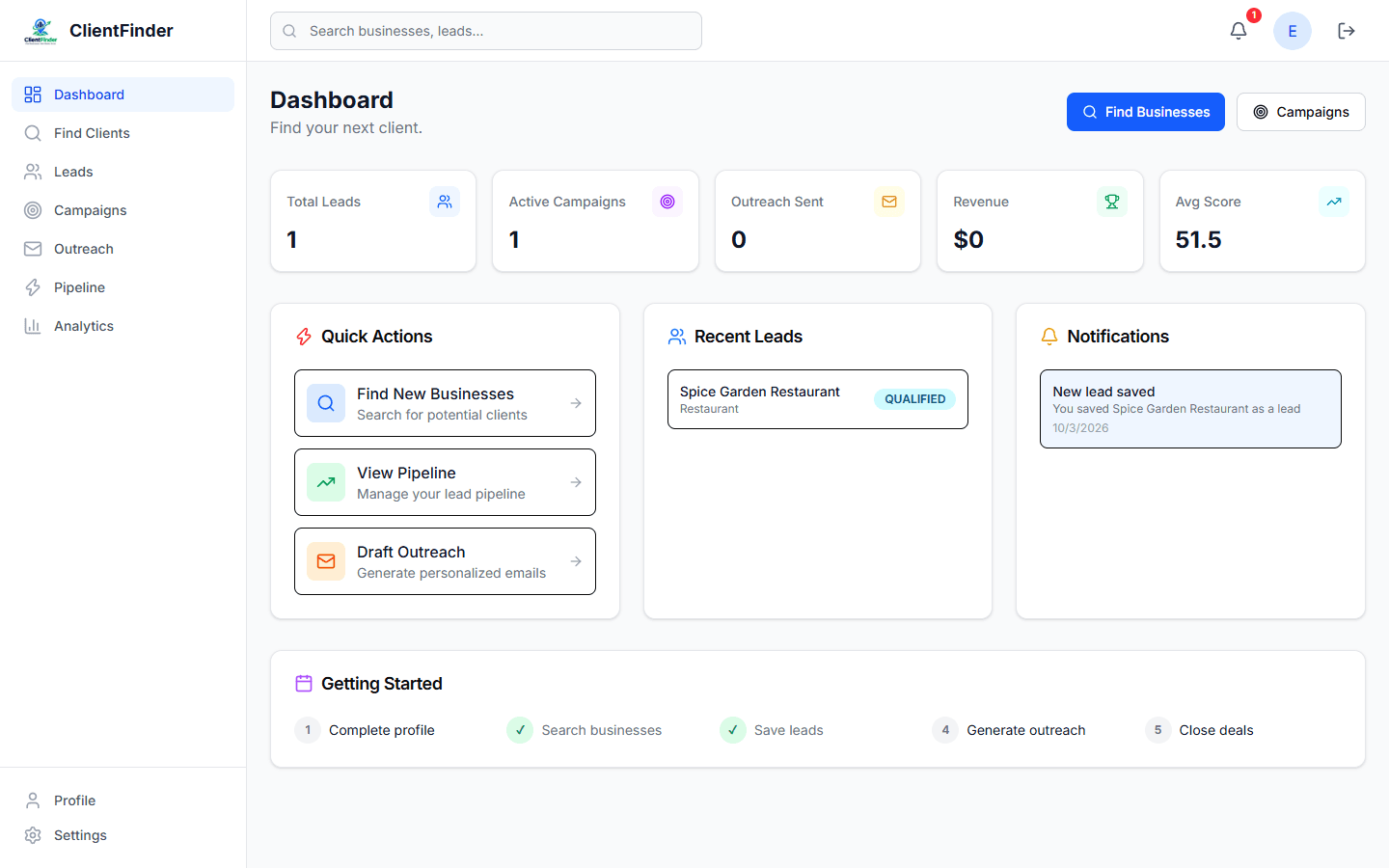
- Google Maps discovery
- Verified emails & phones
- Your own SMTP account
- CSV export
- Opportunity scoring
How it works
From a blank search box to a booked call — three steps, one workspace.
- 01
Search your niche
Pick a keyword, choose a location, set your radius — real businesses from Google Maps land in your workspace in seconds.
- 02
Qualify in seconds
Every lead gets an opportunity score. Filter by rating, verified email or phone, and only spend time on the ones worth chasing.
- 03
Reach out & close
Draft personalized outreach from your own SMTP account, move deals across your pipeline, and watch the analytics roll in.
Everything between search and signed
No stitched-together tool stack. Discovery, scoring, outreach, and pipeline live in one place.
Map-powered discovery
Keyword and location search with radius, category, and data filters — has website, has email, has phone, minimum rating.
Contact data you can use
Emails and phone numbers surface with every business, so your first message has somewhere real to go.
Opportunity scoring
Each lead is scored and ranked, so you always know who to contact first — anywhere in the app, not just one screen.
Campaigns & outreach
Generate personalized drafts, keep your best templates close, and send from your own email account.
A pipeline you will keep updated
Track every deal from first touch to won with stages that mirror how you actually sell — new, contacted, proposal, closed.
Analytics that matter
Leads found, outreach sent, win rate, revenue — see what is working at a glance and double down on it.
Built for people who sell their own work
No sales team required — ClientFinder fits how independents and small teams actually win clients.
Solo freelancers
Keep a steady stream of local clients coming in while you stay heads-down on delivery work.
Small agencies
Give the whole team one shared pipeline — leads, stages, and outreach everyone can see.
Consultants & coaches
Find businesses already looking for your expertise and open the conversation with real context.
Simple, honest pricing
Start free. Upgrade when the pipeline proves itself — switch or cancel anytime from inside the app.
Free
Get started with basic features
$0
- 50 leads/month
- Basic scoring
- Email templates
- CSV export
- Most popular
Pro
Advanced features for growing freelancers
$29/month
- Unlimited leads
- Advanced scoring
- A/B testing
- Priority support
- API access
- Custom templates
Business
Full platform access for teams
$79/month
- Everything in Pro
- Team collaboration
- Custom integrations
- Dedicated support
- SLA guarantee
- White-label options
All prices in USD per month. The free plan never expires.
Questions, answered
The things people ask before signing up.
Where does the business data come from?
ClientFinder runs searches against Google Maps for your keyword and location — name, category, rating, website, and publicly listed contact details — then stores them in your workspace.
Is there really a free plan?
Yes. The Free plan includes 50 leads a month, basic scoring, email templates, and CSV export — no card required.
How does outreach send?
Through the email account you connect — your own SMTP, your domain, your reputation. Templates and personalized drafts are generated for you before anything goes out.
Can I change plans later?
Anytime. Switch plans from the Billing page inside the app — changes take effect immediately.
What happens to my data?
Your leads, campaigns, and pipeline live in your ClientFinder workspace database — and you can export to CSV whenever you want.
Your next client is already on the map
Start on the free plan, run your first search today, and only upgrade when the pipeline proves itself.